
MANOTERRA decodes
August 2025
Manoterra decrypts the latest reports and news topics to help you grasp the essentials in less than 3 minutes of reading.
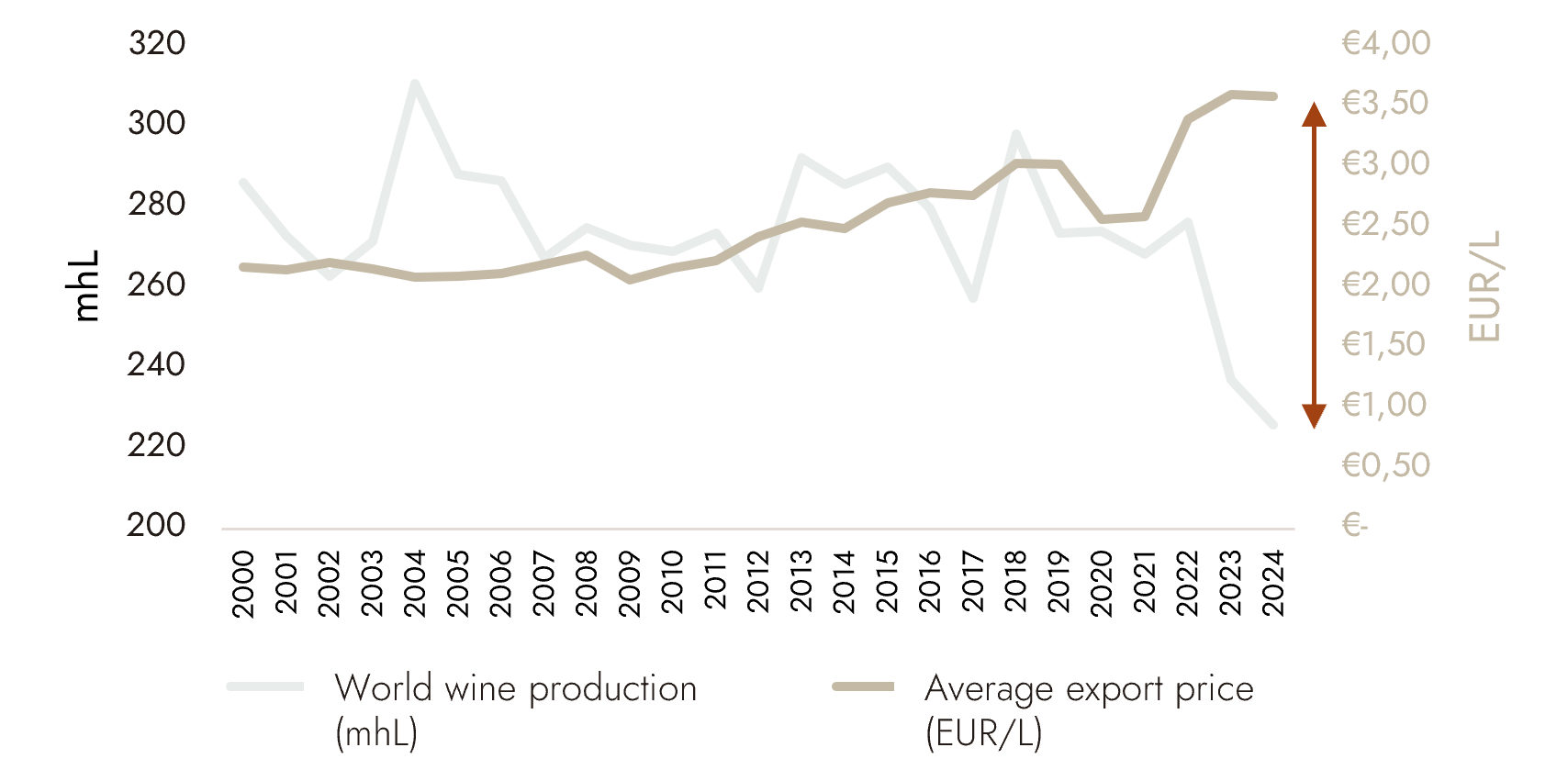
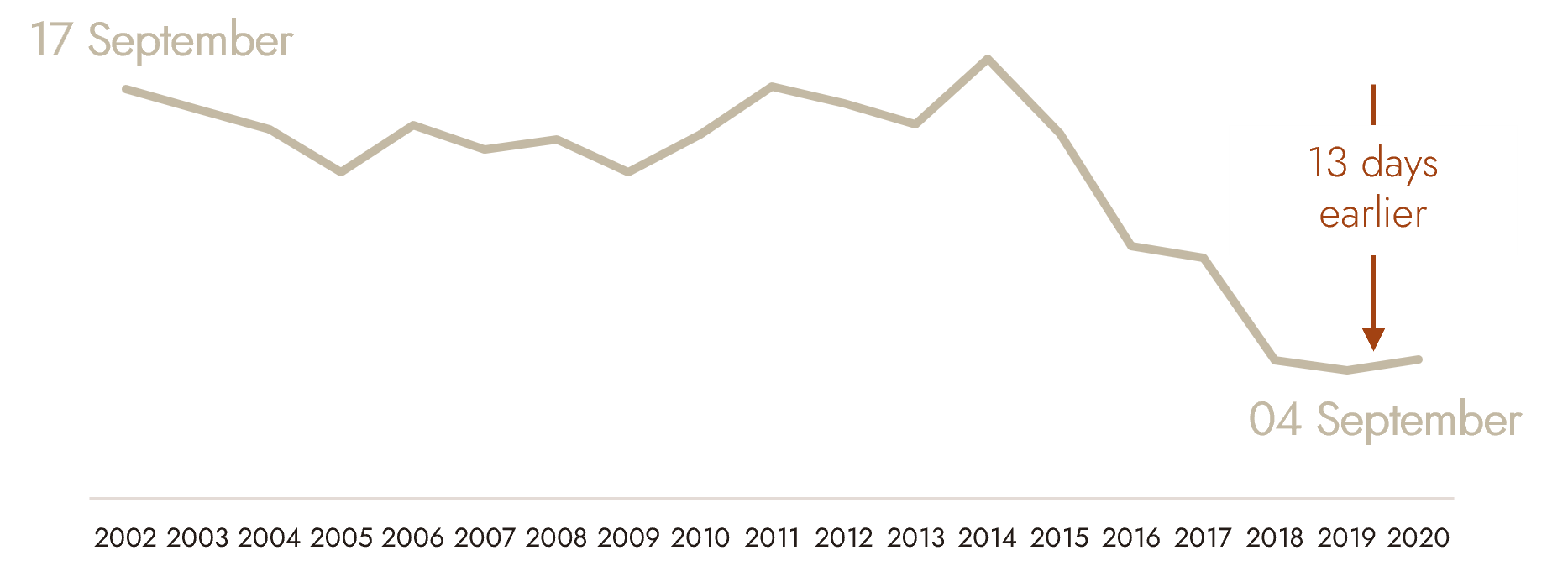
Multiple climatic hazards explain a structural decline in production: Heat waves and drought reduce fruiting, berry size, and photosynthesis, which lowers yields. Advancing phenology increases the risk of spring frost, with harvests starting earlier, as shown in the graph below (Burgundy). Extreme events are becoming more frequent, leading to declines in production:
RISKS ASSESSMENT
- Map assets/supplies in relation to hazards and set alert thresholds.
- Assess dual materiality: physical hazards and financial impacts.
- Analyze the evolution of activities using prospective scenarios.
ADAPTATION
- Anticipate the effects of climate change (night harvesting, shade, efficient irrigation)
- Adapt agricultural practices (regenerative agriculture)
- Integrate adaptation into prices and investments
IN BRIEF
Climate change is no longer just background noise: it is reshaping the global supply landscape and price dynamics. Operators who measure their exposure, anticipate extreme events, and adapt their practices/purchasing are already protecting their quality and margins. Switching to a “predict-protect-secure” mode is now a competitive advantage.
Sources : FAO World in Data, Labbé et al., Climate of the Past, OIV (rapports 2023/2024), études/rapports gel FR 2021